Monday, August 21, 2006
I did it again
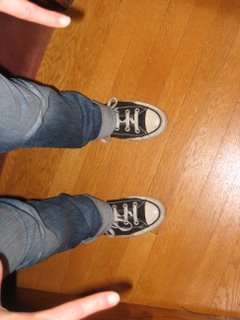
Over the weekend I moved to Ann Arbor to go to graduate school. I miss Minneapolis terribly but I will do my damnedest to keep pogoing outside the MSP. More content TK.


Thursday, August 10, 2006
Subcultural capital

The Walker's sprawling Diane Arbus retrospective closes exactly one month from today. It's really worth seeing, and Thursdays are free. The show's strength, strangely enough, isn't its exploration of Arbus the photographer but of Arbus the writer. Curators have collected what seem like hundreds of pages from her journals, date books and note pads, whereon Arbus satisfied a Plath-like compulsion to sketch out the perilous topography of her subconscious. The Walker has transformed several smaller gallery spaces into mock-up darkrooms, where sepia-tinged lights flicker overhead and Arbus's handwriting covers the walls. The effect is seductive, spectral, and more than a little bit spooky. While the exhibit stops short of psychologizing Arbus, especially her motives for suicide, its juxtaposition of the visual and the verbal does an admirable job of letting the artist speak for herself.
Tuesday, August 08, 2006
Yr Critique
My EMP Jem paper is in the new issue of Bitch (Fall '06, #33). The theme is Hot & Bothered but it's basically a sex issue, Bitch style, which makes it smarter and more nuanced than the average tri-yearly Mademoiselle "How to Give Great Blow Jobs!" yawner.
Not so smart and nuanced? Deborah Solomon's interview with Andi Zeisler in the NYT. Solomon's line of questioning wavers from probing to antagonistic to hostile:
Solomon: You can’t say Chloe [of the TV series 24] is a feminist. She is more of a postfeminist who instinctively takes control in a world mismanaged by men.
AZ: I don’t believe in postfeminism. The media love to trot out the idea that feminism is dead, and every so often it will be the cover story in Time or somewhere else. But feminism is as alive as ever.
S: Is it really? It seems as if its original vision of social equality has been undermined by third-wave feminists like yourself, who limit your critiques to, say, Tori Spelling’s breasts. Doesn’t the obsession with pop culture risk trivializing feminism?
AZ: I think that could be a risk. But if you are going to be working in feminist activism, you have to look at pop culture, because that’s what everyone else is looking at. Young women today have more day-to-day contact with “Desperate Housewives” than with the radical feminist writings of Germaine Greer or Shulamith Firestone.
Thoughtfully criticizing the third wave is one thing, but is anyone else having flashbacks to that 1998 Talk of the Nation condescend-a-thon? The one that Le Tigre turned into "They Want To Make A Symphony Out of the Sound of Women Swallowing Their Own Tongues"? At least Andi doesn't swallow her own tongue here--she holds her ground and holds it well.
Not so smart and nuanced? Deborah Solomon's interview with Andi Zeisler in the NYT. Solomon's line of questioning wavers from probing to antagonistic to hostile:
Solomon: You can’t say Chloe [of the TV series 24] is a feminist. She is more of a postfeminist who instinctively takes control in a world mismanaged by men.
AZ: I don’t believe in postfeminism. The media love to trot out the idea that feminism is dead, and every so often it will be the cover story in Time or somewhere else. But feminism is as alive as ever.
S: Is it really? It seems as if its original vision of social equality has been undermined by third-wave feminists like yourself, who limit your critiques to, say, Tori Spelling’s breasts. Doesn’t the obsession with pop culture risk trivializing feminism?
AZ: I think that could be a risk. But if you are going to be working in feminist activism, you have to look at pop culture, because that’s what everyone else is looking at. Young women today have more day-to-day contact with “Desperate Housewives” than with the radical feminist writings of Germaine Greer or Shulamith Firestone.
Thoughtfully criticizing the third wave is one thing, but is anyone else having flashbacks to that 1998 Talk of the Nation condescend-a-thon? The one that Le Tigre turned into "They Want To Make A Symphony Out of the Sound of Women Swallowing Their Own Tongues"? At least Andi doesn't swallow her own tongue here--she holds her ground and holds it well.
Saturday, August 05, 2006
What the Zizek?
Okay, so the coda of that last post? About not arguing with Zizek? Screw that.
Highsmith's Ripley is in a way disconnected from the reality of flesh, disgusted at the Real of life, of its cycle of generation and corruption. Marge, Dickie's girlfriend, provides an adequate characterization of Ripley: "...He isn't normal enough to have any kind of sex life." Insofar as such coldness characterizes a certain radical lesbian stance, one is tempted to claim that, rather than being a closet gay, the paradox of Ripley is that he is a male lesbian. This disengaged coldness that persists beneath all possible shifting identities gets somehow lost in the film. The true enigma of Ripley is why he persists in this shuddering coldness, retaining a psychotic disengagement from any passionate human attachment...
I do not appreciate or comprehend the proposed connection between "coldness" and radical lesbianism. Zizek doesn't equate (radical) lesbianism with abnormality, psychosis and self-delusion--but he comes close. How do you jump so fluidly from "not normal enough to have any kind of sex life" to "radical lesbian"? How could a word that denotes a preference for a certain kind of sexual partner ever describe someone who doesn't want any sexual partners? And could we have a little more problematization of Marge's "normal," please?
A primary criticism of lesbianism and lesbian feminism has been that it ignores the biological necessity and basis of heterosexuality--i.e., human reproduction. Historically, lesbian feminists have been attacked for perverting the "reality of flesh" and its "cycle of regeneration." Disengaged from the realities and comforts of straightness (and patriarchy), they are seen as unnatural, unaffectionate, irrational shrews, confused about their true womanly purpose. Zizek clearly did not intend to support this tradition of stereotyping, but his characterization of Ripley as a self-deluding, philophobic, asexual yet still somehow lesbian ice cube does more than a little to shore it up.
This logic reminds me of Jon Pareles reporting on S-K in the New York Times yesterday, suggesting that being an "openly gay" musician writing political lyrics makes you "tediously righteous" and didactic. Forgetting for a moment that he got some people's orientations mixed up, where's the necessary connection? He uses the word "gay" but it's in the context of women, and I wonder whether he would have made a similar comment while talking about gay male musicians. Lesbians get tagged as tediously righteous (cold, perhaps?) in a way that queer men rarely do, and gay men who openly politicize their sexualities can never match the perceived didacticism of queer women. This is because queer women as a group are assumed to imitate male heterosexuality, and queer men female heterosexuality. While a man "acting like" a woman can be cute, funny, and ultimately forgettable, he has no privilege to gain, no power to wrestle. When a woman "acts like" a man it's not funny, just threatening.
Maybe that's why they only let Keira Knightley stay kind of convincingly cross-dressed for about two minutes in PC2. After that it was nice, but awfully "don't worry, she's really a girl!" hair extension city.
Highsmith's Ripley is in a way disconnected from the reality of flesh, disgusted at the Real of life, of its cycle of generation and corruption. Marge, Dickie's girlfriend, provides an adequate characterization of Ripley: "...He isn't normal enough to have any kind of sex life." Insofar as such coldness characterizes a certain radical lesbian stance, one is tempted to claim that, rather than being a closet gay, the paradox of Ripley is that he is a male lesbian. This disengaged coldness that persists beneath all possible shifting identities gets somehow lost in the film. The true enigma of Ripley is why he persists in this shuddering coldness, retaining a psychotic disengagement from any passionate human attachment...
I do not appreciate or comprehend the proposed connection between "coldness" and radical lesbianism. Zizek doesn't equate (radical) lesbianism with abnormality, psychosis and self-delusion--but he comes close. How do you jump so fluidly from "not normal enough to have any kind of sex life" to "radical lesbian"? How could a word that denotes a preference for a certain kind of sexual partner ever describe someone who doesn't want any sexual partners? And could we have a little more problematization of Marge's "normal," please?
A primary criticism of lesbianism and lesbian feminism has been that it ignores the biological necessity and basis of heterosexuality--i.e., human reproduction. Historically, lesbian feminists have been attacked for perverting the "reality of flesh" and its "cycle of regeneration." Disengaged from the realities and comforts of straightness (and patriarchy), they are seen as unnatural, unaffectionate, irrational shrews, confused about their true womanly purpose. Zizek clearly did not intend to support this tradition of stereotyping, but his characterization of Ripley as a self-deluding, philophobic, asexual yet still somehow lesbian ice cube does more than a little to shore it up.
This logic reminds me of Jon Pareles reporting on S-K in the New York Times yesterday, suggesting that being an "openly gay" musician writing political lyrics makes you "tediously righteous" and didactic. Forgetting for a moment that he got some people's orientations mixed up, where's the necessary connection? He uses the word "gay" but it's in the context of women, and I wonder whether he would have made a similar comment while talking about gay male musicians. Lesbians get tagged as tediously righteous (cold, perhaps?) in a way that queer men rarely do, and gay men who openly politicize their sexualities can never match the perceived didacticism of queer women. This is because queer women as a group are assumed to imitate male heterosexuality, and queer men female heterosexuality. While a man "acting like" a woman can be cute, funny, and ultimately forgettable, he has no privilege to gain, no power to wrestle. When a woman "acts like" a man it's not funny, just threatening.
Maybe that's why they only let Keira Knightley stay kind of convincingly cross-dressed for about two minutes in PC2. After that it was nice, but awfully "don't worry, she's really a girl!" hair extension city.
Saturday, July 29, 2006
High diva dudgeon
An especially lucid post at JD's SH nails down the seductive lure of bashing Sofia Coppola's Marie Antoinette. It's too facile, probably, but the parallels are there:
Thus we are tempted into psychologizing the auteur: the story of the poor little rich girl, born and then again delivered into an incomprehensibly-contoured world of privilege, glamour and public visibility which would offer her anything but real experience and the possibility of being taken seriously, proved finally irresistible to [Coppola], and damn the context.
Speaking of psychologizing the auteur, Tiny Mix Tapes earns 10,000 Pogo Points for even insinuating "The Beatles Broke Up Yoko Ono." Take that, misogynist Beatles historians.
Essentially, Yoko's taste for the avant-garde style of music (concept comes before function or form) was one of the major factors in John's change in musical direction. After getting involved with her and gaining inspiration from her conceptual expressions, Lennon went on to write his best music: "Julia," "Happiness is a Warm Gun," "I Want You (She's So Heavy);" even the vitriolic attack of the stellar "Cold Turkey" bears her tremendous influence. And that's just in the '60s.
As for the suggestion that the first Tom Ripley novel prefigured glam a full 17 years before Ziggy sucked up into his mind and Marc was all alone without a telephone...why not? I love the idea of Patricia Highsmith sitting down at her desk in 1970 and exclaiming, "At last, the rock 'n roll era is over! Now I can finally revisit Ripley, since he never made sense within its context of Dionysianism and appeal to the big Other!" But I don't see the need to go and and sweep all the homoeroticism under the rug like that. The line between wanting to be someone and wanting to do someone is beautifully blurred and maddeningly unfixed, and its waverings deserve scrutiny. Then again, it's hard to argue with Zizek.
Thus we are tempted into psychologizing the auteur: the story of the poor little rich girl, born and then again delivered into an incomprehensibly-contoured world of privilege, glamour and public visibility which would offer her anything but real experience and the possibility of being taken seriously, proved finally irresistible to [Coppola], and damn the context.
Speaking of psychologizing the auteur, Tiny Mix Tapes earns 10,000 Pogo Points for even insinuating "The Beatles Broke Up Yoko Ono." Take that, misogynist Beatles historians.
Essentially, Yoko's taste for the avant-garde style of music (concept comes before function or form) was one of the major factors in John's change in musical direction. After getting involved with her and gaining inspiration from her conceptual expressions, Lennon went on to write his best music: "Julia," "Happiness is a Warm Gun," "I Want You (She's So Heavy);" even the vitriolic attack of the stellar "Cold Turkey" bears her tremendous influence. And that's just in the '60s.
As for the suggestion that the first Tom Ripley novel prefigured glam a full 17 years before Ziggy sucked up into his mind and Marc was all alone without a telephone...why not? I love the idea of Patricia Highsmith sitting down at her desk in 1970 and exclaiming, "At last, the rock 'n roll era is over! Now I can finally revisit Ripley, since he never made sense within its context of Dionysianism and appeal to the big Other!" But I don't see the need to go and and sweep all the homoeroticism under the rug like that. The line between wanting to be someone and wanting to do someone is beautifully blurred and maddeningly unfixed, and its waverings deserve scrutiny. Then again, it's hard to argue with Zizek.
Thursday, July 27, 2006
Friday, July 21, 2006
Unfinished business
Can there be some kind of public announcement about how great the Au Pairs anthology is? I mean, DEAR GOD. I know this phrase should be banned for the next ten years or until it recovers its meaning, but they're like Gang of Four--only Marxist AND feminist. Which boils down to pretty much the greatest thing to happen to the universe since Poly Styrene told off bondage. The first few tracks on Playing With a Different Sex even have weird echoes of upbeat early Smiths--all the steely bass and free-floating Marr-guitar. YES.
I have to deliver between 1 and 500 words on Sleater-Kinney to Venus (via Mairead) by August 1st. Suddenly, the subject I could write about more easily and more passionately than anything else in the world is making me about as articulate as a can of Tuno. Every observation and critique I ever had of them has flown out of my head (in spite of an amazing transglobal S-K post-breakup symposium I am currently enjoying with Fangirl). To really do this justice I ought to be on some sort of sensory deprivation retreat in the Catskills. How do you write about the band whose sound is the essence of yr freedom, rapture and joy? Who are so complex and real and protean they refuse all attempts at explication and analysis?
Seriously, let me know.
I have to deliver between 1 and 500 words on Sleater-Kinney to Venus (via Mairead) by August 1st. Suddenly, the subject I could write about more easily and more passionately than anything else in the world is making me about as articulate as a can of Tuno. Every observation and critique I ever had of them has flown out of my head (in spite of an amazing transglobal S-K post-breakup symposium I am currently enjoying with Fangirl). To really do this justice I ought to be on some sort of sensory deprivation retreat in the Catskills. How do you write about the band whose sound is the essence of yr freedom, rapture and joy? Who are so complex and real and protean they refuse all attempts at explication and analysis?
Seriously, let me know.
Tuesday, July 18, 2006
Aliens in our midst
Various Artists
Queer Noises, 1961-1978: From the Closet to the Charts [Trikont]
When Jose Sarris's droll sprechstimme sidles up to a piano melody on the first track of this compilation of queer anti-hits, the time travel effect is instantaneous and intense. It's 1960 at San Francisco's Black Cat Club, police are routinely rounding up gay bar-goers on charges of "indecency" and no one has ever heard of Rufus Wainwright. The recording, which barely but tantalizingly captures audience reaction, is suffused with the rich, bittersweet flavor of the underground--with an emphasis here on the bitter over the sweet. This holds true for much of Queer Noises' first half, dominated as it is by textbook examples of the "bitch/butch" musical dyad, in which a camped-up, breathy falsetto chimes in to comment on the warblings of a hunky baritone, if not spar with a rival Mary. It's the sound of a community mired in self-loathing, but also resolved to survive, and even thrive, on its own terms. Rod McKuen's spoken word track "Eros" is close to unlistenable, if only because its description of pre-Stonewall cruising is so desperate, humiliated and squeeze-your-heart real; likewise, the satirical "I'd Rather Fight than Swish" sacrifices some of its wry humor to out-and-out hostility. But Noises is an historical document, not a pride parade, and the collection's greatest strength is its preservation of queer musical histories, however regretful or problematic, that are often obscured by larger narratives of LGBT assimilation and "progress."
Still, there's no shortage of fist-pumper anthems here, from Zebedy's torch song stunner "The Man I Love" to Harrison Kennedy's adorable "Closet Queen" and Valentino's "I Was Born This Way." On "I'm a Man," forgotten 70s legend Jobriath wields an astounding voice that is equal parts Begees and Bowie, all the better for wailing, "I will love you the way a man loves a woman" over plush harpsichord accompaniment. Elsewhere, genres range from cabaret, novelty, and music hall sing-a-long to country, disco, and punk. Dead Fingers Talk roll up the Stooges, New York Dolls, Television and Lou Reed around a gorgeously rusty weedwacker guitar and come up with "Nobody Loves You When You're Old and Gay," a slice of glam rock at its sugary finest. The inclusion of the Ramones is especially apt, since it proves both the multiplicity of queer lived experience and its reach beyond opera and musicals. Even the word "punk" itself is inextricable from queer subculture, since one of its meanings originally refered to a male prostitute, or the passive partner in sex between men.
In spite of having some of the most comprehensive and well-researched liner notes this side of a Supremes anthology, there's a big, sad hole at the center of Queer Noises, and it's lady-shaped. Of its 24 tracks, only one is performed by a woman--Polly Perkins' shocking "Coochy Coo." This seems partly a reflection of historical realities and partly an indication of the compiler's interests. The women's music movement of the 70s could certainly fill up a compilation of its own, and it's a shame to see another example of "queer" used as shorthand for "gay male." Still, Queer Noises is an astonishing journey into a not-so-distant sonic past, and a reminder of what bent pop was like before Frankie went to Hollywood.
Queer Noises, 1961-1978: From the Closet to the Charts [Trikont]
When Jose Sarris's droll sprechstimme sidles up to a piano melody on the first track of this compilation of queer anti-hits, the time travel effect is instantaneous and intense. It's 1960 at San Francisco's Black Cat Club, police are routinely rounding up gay bar-goers on charges of "indecency" and no one has ever heard of Rufus Wainwright. The recording, which barely but tantalizingly captures audience reaction, is suffused with the rich, bittersweet flavor of the underground--with an emphasis here on the bitter over the sweet. This holds true for much of Queer Noises' first half, dominated as it is by textbook examples of the "bitch/butch" musical dyad, in which a camped-up, breathy falsetto chimes in to comment on the warblings of a hunky baritone, if not spar with a rival Mary. It's the sound of a community mired in self-loathing, but also resolved to survive, and even thrive, on its own terms. Rod McKuen's spoken word track "Eros" is close to unlistenable, if only because its description of pre-Stonewall cruising is so desperate, humiliated and squeeze-your-heart real; likewise, the satirical "I'd Rather Fight than Swish" sacrifices some of its wry humor to out-and-out hostility. But Noises is an historical document, not a pride parade, and the collection's greatest strength is its preservation of queer musical histories, however regretful or problematic, that are often obscured by larger narratives of LGBT assimilation and "progress."
Still, there's no shortage of fist-pumper anthems here, from Zebedy's torch song stunner "The Man I Love" to Harrison Kennedy's adorable "Closet Queen" and Valentino's "I Was Born This Way." On "I'm a Man," forgotten 70s legend Jobriath wields an astounding voice that is equal parts Begees and Bowie, all the better for wailing, "I will love you the way a man loves a woman" over plush harpsichord accompaniment. Elsewhere, genres range from cabaret, novelty, and music hall sing-a-long to country, disco, and punk. Dead Fingers Talk roll up the Stooges, New York Dolls, Television and Lou Reed around a gorgeously rusty weedwacker guitar and come up with "Nobody Loves You When You're Old and Gay," a slice of glam rock at its sugary finest. The inclusion of the Ramones is especially apt, since it proves both the multiplicity of queer lived experience and its reach beyond opera and musicals. Even the word "punk" itself is inextricable from queer subculture, since one of its meanings originally refered to a male prostitute, or the passive partner in sex between men.
In spite of having some of the most comprehensive and well-researched liner notes this side of a Supremes anthology, there's a big, sad hole at the center of Queer Noises, and it's lady-shaped. Of its 24 tracks, only one is performed by a woman--Polly Perkins' shocking "Coochy Coo." This seems partly a reflection of historical realities and partly an indication of the compiler's interests. The women's music movement of the 70s could certainly fill up a compilation of its own, and it's a shame to see another example of "queer" used as shorthand for "gay male." Still, Queer Noises is an astonishing journey into a not-so-distant sonic past, and a reminder of what bent pop was like before Frankie went to Hollywood.
Thursday, July 06, 2006
Be Your Own Finally Punk Grates
Feminism has taught me to distrust wave metaphors. They have a tendency to elide entire groups and eras from the historical record, suggesting that, for example, all American feminists between the years 1921 and 1965 were just sitting around cleaning their ovens and playing peanuckle, biding their time until Betty Friedan. Still, the cadre of riotous woman-powered bands breaking this summer is looking awfully watery crest-shaped, if stopping short of bidding for riot grrrl's second wave. A sampling:
THE GRATES
Hometown: Brisbane, Australia
Newly-released album: Gravity Won't Get You High [Dew Process]
Charismatic frontwoman: Patience Hodgson
Championed by: SXSW
Sounds like: Velocity Girl, Elastica, the Dishes, Fever to Tell-era Yeah Yeah Yeahs
Listen to: "InsideOutside," "Lies Are Much More Fun"
BE YOUR OWN PET
Hometown: Nashville, Tennessee
Newly-released album: s/t [Ecstatic Peace/Universal]
Charismatic frontwoman: Jemina Pearl
Championed by: Thurston Moore
Sounds like: Machine-era YYYs, Bikini Kill, Slant 6
Listen to: "Bicycle Bicycle You Are My Bicycle," "Girls On TV"
FINALLY PUNK
Hometown: Austin, Texas
Newly-released album: s/t, 7" [self-released/Kill Rock Stars]
Charismatic frontwoman: rotates, grrrl-style
Championed by: Brace Payne
Sounds like: Numbers, Erase Errata, Spider and the Webs
Listen to: "Negative Creep" (Nirvana cover)
Disclaimer: post scooped by both Interrobang?! and City Pages.
THE GRATES
Hometown: Brisbane, Australia
Newly-released album: Gravity Won't Get You High [Dew Process]
Charismatic frontwoman: Patience Hodgson
Championed by: SXSW
Sounds like: Velocity Girl, Elastica, the Dishes, Fever to Tell-era Yeah Yeah Yeahs
Listen to: "InsideOutside," "Lies Are Much More Fun"
BE YOUR OWN PET
Hometown: Nashville, Tennessee
Newly-released album: s/t [Ecstatic Peace/Universal]
Charismatic frontwoman: Jemina Pearl
Championed by: Thurston Moore
Sounds like: Machine-era YYYs, Bikini Kill, Slant 6
Listen to: "Bicycle Bicycle You Are My Bicycle," "Girls On TV"
FINALLY PUNK
Hometown: Austin, Texas
Newly-released album: s/t, 7" [self-released/Kill Rock Stars]
Charismatic frontwoman: rotates, grrrl-style
Championed by: Brace Payne
Sounds like: Numbers, Erase Errata, Spider and the Webs
Listen to: "Negative Creep" (Nirvana cover)
Disclaimer: post scooped by both Interrobang?! and City Pages.
Friday, June 30, 2006
S-er F-er
Spider Fighter are playing the Entry tonight round about 8:00, $6. When they played the Triple Rock a few months ago it bordered on historic. Come say hi--I'll be the tiniest pink stripe-haired lady in the room.
Tuesday, June 27, 2006
A sound they don't want you to own

The news broke for me today at 2:28 PM, in text message form--the musical equivalent of "yr beloved childhood friend/relative/golden retriever Sunshine passed away":
SLEATER-KINNEY ARE NO MORE :-(
I practically ran out of work, took a deep breath and began making the necessary phone calls. I called Anjanette about 8 times, even though I knew that her phone was broken and she couldn't pick it up.
It's very hard to verbalize what this band has meant to me, how deeply they have influenced my appreciation of music and music history. Seeing them play has made me proud to be a woman, a feminist, queer, and alive, but most of all, it has reminded me that there are others out there for whom music is not just a status symbol or fashion accessory or excuse to get drunk on a Tuesday night. Watching them jump and scream and hammer at axes and drum kits it was always beautifully, vividly apparent that to them, music was a matter of life and hope and breath, not haircuts and scenester posturing.
Rob Mitchum once described Sleater-Kinney as "obliterat[ing] the gender card," and that is exactly what they did. After a certain point in their development, they refused to talk about how being women influenced their musicianship--refused, that is, to be seen as anything other than a band, full stop. And strangely, that turned out to be as feminist an accomplishment as anything they wrangled circa Call the Doctor and s/t. Because while we absolutely, urgently need people like Le Tigre talking explicitly about feminism and insisting that their experiences as (marginalized, queer, abused, objectified) women inform their lives and music, we also need bands exploding the girl ghetto and proving that there is nothing inherently male about rock virtuosity and prowess. We need Janet schooling Bonham. We need Corin unfurling R. Plant soul-howls. We need Carrie windmilling and leaping off monitors and pouring out 1/16 notes with eyes-closed fury and abandon and release, making roomfuls of 30-year-old crit boys ask, "Pete Townshend was who again?" Because when that happens, the still-solid glacier of misogynist rock tradition melts just a little, and gets that much more reappropriable for those of us who were never going to be yr mama or smile pretty, take take the money.
now do you hear that sound
as the model breaks?
take the stage
let the image of him fade away
go back and tear the pictures from the page
it's time for a new rock n' roll age
history will have to find a different face
and if you're ready for more
I just might be what you're looking for
Sleater-Kinney were what we were looking for. After August 11th, we'll have to find it somewhere else.
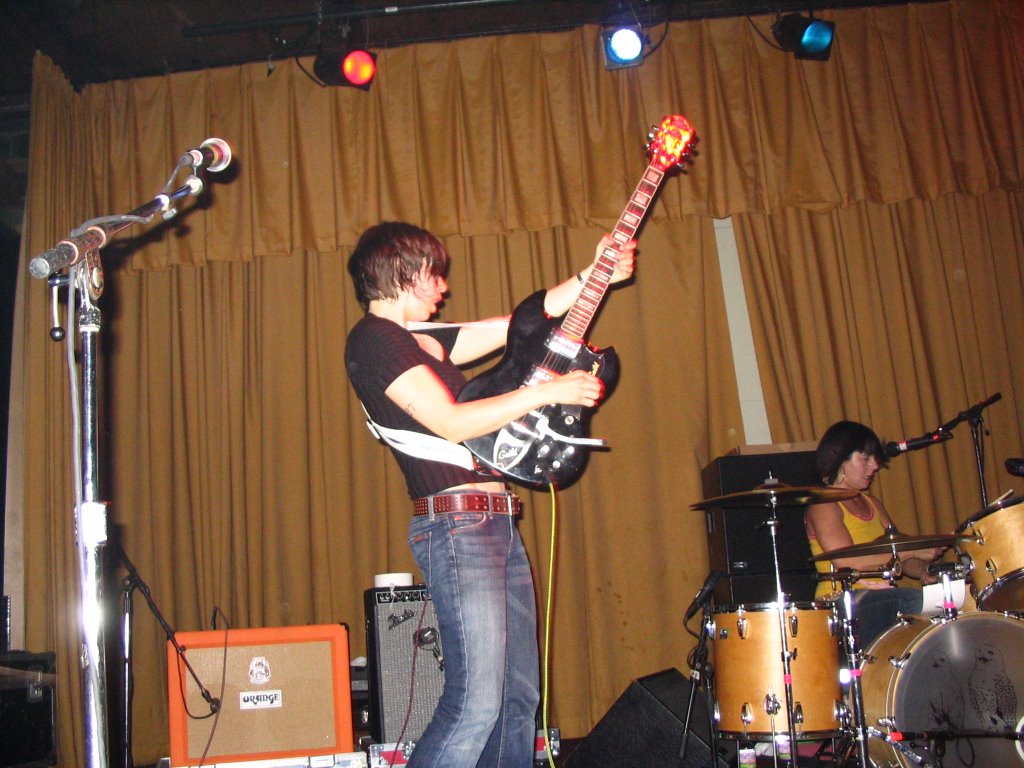
Lady Mairead delivers a fine eulogy here.
Saturday, June 24, 2006
Elephants go oral
Someone would be like, "I scored a Farfisa at the J&J Thrift Center for $40!" So it would be like, "Of Montreal wants a Farfisa on this song. Call Laura." Will Hart scored a guitar organ, so of course there's a little wave where everyone's album has a guitar organ on it. And then I got the zanzithaphone. It's really a Casio digital horn, but I was not about to have my credit on the Neutral Milk album be for Casio digital horn, so I called it the zanzithaphone. It was very much about who found what instrument when, and how long before that instrument broke.
An oral history of Elephant 6.
An oral history of Elephant 6.
Sunday, June 18, 2006
Blank degeneration
One of many apparitions in Tony Kushner's Angels in America, an 18th century dandy paying visit to a sickly descendent, observes with bemused dismay having arrived in 1985 New York, "The twentieth century! Oh dear. The world has gotten so terribly, terribly old."
Like most ghosts who show up in plays, he knows what he's talking about. The world has become disturbingly antique--it's just that parts of it have a trick about seeming more decayed than others. The United States (if only in stodgy, post-colonialist nation-state terms) is still hardly more than a toddler, wobbling down the transglobal sidewalk on chubby legs and dropping its pacifier in the mud. Compared to a more mature Western country like, say, England, it's got about as much historical depth and baggage as last week's episode of "Wife Swap." The difference is a rich English heritage but also a punishing debt, legacy, and accretion of guilt; that is to say, the weight of a collective national onus more than a thousand years in the making. Imagine what living in the U.S. might be like if it'd been suffering fools and faking wars since 876 rather than 1776.
When Queen Elizabeth I travels into the future to discover her kingdom's destiny in Derek Jarman's Jubilee, she finds an apocalyptic post-Britain driven mad by its terrible oldness. Gangs of girl-Londoners go on public rampages of torture and murder, heaps of rubbish burn seemingly nonstop, and political power has all but yielded to a creepy, bald media impresario called Borgia Ginz. Ginz is perhaps meant to recall the ruthless Italian Renaissance family and mobster collective of his first name, and Jack Birkett, with his bugged-out eyes, maniacal giggle and meth addict's leer, plays Ginz as a kind of queeny, arachnid Cesare Borgia fully prepared to enjoy the benefits of his self-made autocracy. He is orbited by a duo of mute lady supermodel-types (rather unconvincing given the way he ogles Adam Ant) as well as the terrorist gang whose bickerings and crime sprees make up much of the film. Leader Bod (Jenny Runacre), sadist Mad (Toyah Willcox), nympho Crabs (Nell Campbell) and cynical historian Amyl Nitrate (Jordan) share a dingy bunker of an apartment and go on group trips to the corner chip shop to kill the cook.
In the end, Jubilee narrowly misses being a radical feminist film. Its leading female characters seem driven by a righteous, primal rage, as if the accumulating centuries of gender inequality have finally taken their toll and inspired the women of England to take to the streets. Mad ridicules Crabs for sleeping with men, spitting, "Sex is for geriatrics!" and carves the word LOVE into Bod's back with a knife. Viv, a peripheral member of the gang, is having a giddy three-way with two brothers (Angel and Sphinx, who are also happily doing it with each other), and everybody is a prickly, beauty-fucking, androgynous mess. It's a shame, then, that the majority of the gang's victims are women, and not just biological ones. Wayne County has a few seconds of prancy karaoke screentime before Mad and the girls arrive to push her about, shove her to the ground and throttle her to death. Mad's satisfaction in the murder appears to arise from something akin to transphobia, and the scene mimics too many other on-screen tranny-killings in which the perverted she-man is left splayed on the floor, wig torn off, and exposed for the fraud she really is.
Similarly, Angel and Sphinx's deaths at the hands of the police, though granted an emotional gravitas and tragedy rare in the rest of the film, are instigated by Angel's blithe come-on to an approaching officer, "Give us a kiss!" Jubilee has (bizarrely) drawn criticism from some for being politically conservative, and this is the only place in which such a reading holds water; by presenting sexual freedom side by side with corruption, looting and murder as an effect of a crumbling society, the film implies that queerness might not have a place in the reformed utopia for which it longs.
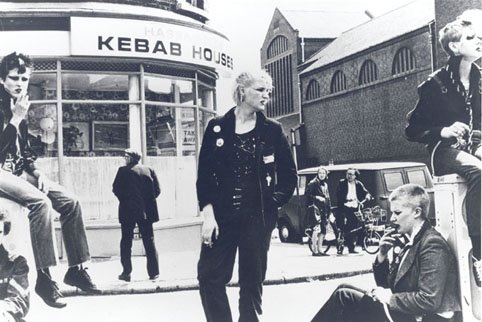
Running through Jubilee like a Manic Panic'd neon pink stripe is the first-wave punk aesthetic that insiders like Vivienne Westwood feared the film would exploit. She needn't have worried; the fashion and music on display bristle with authenticity, and Jarman gets it right. Adam and the Ants turn in a scalding performance of "Plastic Surgery" (note the pointed anti-exploitation, anti-music biz commentary that follows the song) and a decidedly un-skinny Amyl sexes up "Rule Britannia" with snap garters and grrrl snark that foreshadow Corinne Burns in Ladies and Gentlemen, The Fabulous Stains. Like Corinne's, Amyl's trashy rent girl stage persona is an escape ladder out of her oppression rather than an effect of it, even as the flat tone of her "sexy" posturing suggests a behind-the-scenes male puppetmaster, controlling her movements, options, and body-as-commodity.
Jarman's interest in gender and British social history informs a Warholian understanding of the pop star as artificial, irresistible,and a little bit toxic. Ginz's pet musicians (engineered with Malcolm McLaren-like cunning) have lost control of their careers before those careers even begin, giving themselves up to an increasingly deranged popular culture in which art is dead but Top of the Pops is always on. "The world is no longer interested in heroes," Mad tells us. "We now know too much about them." And what are pop stars, if not heroes who've been interviewed in Vanity Fair one too many times? As Jubilee concludes in a last gasp of violence and grief, it becomes painfully obvious that its plea for compassion and realness originates not in a parallel universe, but our own.
Wednesday, June 14, 2006
Nach David Bowie, die Sintflut
Many Pogo reviews and critiques TK--first, From the Closet to the Charts: Queer Noises, 1961-1978, distro'd by Light in the Attic Recs. Yes, it is a compilation, and yes, the first 20 tracks are sounding stellar to our eager ears; we just need a little more time for digestion and tracks 21-24. All I'll say for now is it's stunning, it's disturbing, and it's what Morrissey listens to on minibreak (surely!).
Second: Jubilee, found today by Anjanette at the library. Take note, Minneapolitans! Yr newly renovated main library offers, gratis, The Color Purple, Mansfield Park, Prick Up Your Ears, Rip It Up and Start Again, the NME, and films wherein "bands of teenage girl punks roam the streets." There is a shockingly uncondescending teen section with copies of Mellon Collie next to stereos and centrally displayed Alex Sanchez novels where you might expect Hanson and Meg Cabot. That is tax money well spent, kittens. We lugged our spoils back from downtown in my bag like so many gold dubloons.
Finally: tomorrow night I may be at this. Will you? I know a lady who knows a lady who plays the elevator operator.
Second: Jubilee, found today by Anjanette at the library. Take note, Minneapolitans! Yr newly renovated main library offers, gratis, The Color Purple, Mansfield Park, Prick Up Your Ears, Rip It Up and Start Again, the NME, and films wherein "bands of teenage girl punks roam the streets." There is a shockingly uncondescending teen section with copies of Mellon Collie next to stereos and centrally displayed Alex Sanchez novels where you might expect Hanson and Meg Cabot. That is tax money well spent, kittens. We lugged our spoils back from downtown in my bag like so many gold dubloons.
Finally: tomorrow night I may be at this. Will you? I know a lady who knows a lady who plays the elevator operator.
Wednesday, June 07, 2006
Punks on film
Derek Jarman's Jubilee: now in serious competition around Pogo HQ with Fanmail for Most Dreamily Wished-For Yet Almost Unfindable Obscure Indie Film. Queer activist and film pioneer Jarman ruled the (British!) post-punk music video scene, producing clips for Orange Juice, the Smiths, Marianne Faithfull, and the Pet Shop Boys as well as controversial meditations on icons like St. Sebastian, Edward II, Caravaggio and Wittgenstein before his death from AIDS in 1994. Smartie actress Tilda Swinton, who worked with Jarman on Caravaggio, has an amazingly poignant, witty, dishy and in-depth tribute here.
1978's Jubilee was scored by Brian Eno and promises a stunning who's who of first-wave punk faces and haircuts, including those of W/Jayne County, the Slits, and an outrageously young 'n femmey Adam Ant. And seriously, somebody should retroactively subtitle it "A Punk Fantasia on National Themes" (with apologies to Tony Kushner):
Jubilee doesn't bemoan the rise of a punk counterculture as indicative of England's failures. In the film, what goes wrong is not punk, but England. Here the subculture is posited as a reaction to a social and political environment of diminishing returns. Jubilee depicts a post-apocalyptic England, rife with class warfare and directly reflective of the deep recession and state-imposed three-day workweeks of the year of Queen Elizabeth II's Silver Jubilee. Working class London literally burns while the rich idle away at country estates. Global ruler and media mogul Borgia Ginz (Jack Birkett) has turned Buckingham Palace into a huge recording studio, and Westminster Abbey into a gay go-go boy nightclub. Borgia recognizes his own power and influence when he asserts, "If the music's loud enough, we won't hear the world falling apart."
-Todd Ramlow, PopMatters
Thursday, June 01, 2006
W! ASH! ING!/ TON, baby.
After I take her grocery shopping we go back to her house for tea. She dives through bulging cabinets for saffron, but retrieves only a moldy glass jar with some seeds in it labeled "1997."
"Hibiscus pods!" she grins. "I stole them from the British consulate."
"In...1997?"
"Yes! I was downtown at the embassy. I stood up against the gate, leaned over into the garden and brushed them into my jar. Nobody saw me."
"Dodo!"
"Well, they were going to be wasted, falling onto the ground like that."
She brews the tea and I put gingerbread cookies on a plate. I ask if we're going to sit in the dining room or the kitchen and she clucks, "Oh no, we'll sit in the dining room, like white people." I shudder, because 1) this is gruesome, and 2) I am not sure how best to call out an 89-year-old woman on her racism. It is only partially comforting later when we discuss her daughter, the one in the civil air patrol. She flies helicopters over D.C., in part to protect the White House, but Dodo wonders whether it wouldn't be better if hostile aircraft were encouraged to attack Mr. Bush. "How did that man ever get in there?" she spews.
****************************************************************
Later I walk to the ice cream store where all the punk kids used to work and find out that it's closing. They worked at the hardware store down the block, too, where they got to sell hammers to Ian MacKaye and brag about it the next day in school. The hardware store is now a less-than-Irish Irish pub, and the ice cream store, stage for adolescent dating dramas and underage shows alike, is soon to play its last mix tape over the stereo. It was no Olympia (the boys carried the amps while the girls reapplied lip gloss and there was way too much Weezer on those mix tapes) but it was ours, and it gave more than one punk I knew money enough for vinyl and guitar strings and a little independence. Where is the next generation of self-pitying, alienated fuck-ups and closet cases going to gather to discover London Calling and stare at their high-top Converse? The Pottery Barn?
Soon, that'll be all that's left.
"Hibiscus pods!" she grins. "I stole them from the British consulate."
"In...1997?"
"Yes! I was downtown at the embassy. I stood up against the gate, leaned over into the garden and brushed them into my jar. Nobody saw me."
"Dodo!"
"Well, they were going to be wasted, falling onto the ground like that."
She brews the tea and I put gingerbread cookies on a plate. I ask if we're going to sit in the dining room or the kitchen and she clucks, "Oh no, we'll sit in the dining room, like white people." I shudder, because 1) this is gruesome, and 2) I am not sure how best to call out an 89-year-old woman on her racism. It is only partially comforting later when we discuss her daughter, the one in the civil air patrol. She flies helicopters over D.C., in part to protect the White House, but Dodo wonders whether it wouldn't be better if hostile aircraft were encouraged to attack Mr. Bush. "How did that man ever get in there?" she spews.
****************************************************************
Later I walk to the ice cream store where all the punk kids used to work and find out that it's closing. They worked at the hardware store down the block, too, where they got to sell hammers to Ian MacKaye and brag about it the next day in school. The hardware store is now a less-than-Irish Irish pub, and the ice cream store, stage for adolescent dating dramas and underage shows alike, is soon to play its last mix tape over the stereo. It was no Olympia (the boys carried the amps while the girls reapplied lip gloss and there was way too much Weezer on those mix tapes) but it was ours, and it gave more than one punk I knew money enough for vinyl and guitar strings and a little independence. Where is the next generation of self-pitying, alienated fuck-ups and closet cases going to gather to discover London Calling and stare at their high-top Converse? The Pottery Barn?
Soon, that'll be all that's left.
Thursday, May 25, 2006
We hear swooping guitars
Pitchfork lets me play Lois Lane. Those lucky devils in Seattle and PDX are in for some fun shows, methinks.
Monday, May 22, 2006
Homo hoe-down and calendar
May has shaped up to be the queerest month of recent memory, rippling with so many excellent and subversive new film, musical and literary offerings I'm starting to think the revolution homo-style really is going down in earnest (further evidence: I persuaded a 20-something dude at my bookstore to buy Mrs. Dalloway even after he asked nervously, "Isn't this a girly book?" I also pushed Funeral Rites but he left it sitting on the shelf--can't imagine why). Here's a recap of what's been rumbling in the underground this month, with a preview of queerities to come:
MATMOS, THE ROSE HAS TEETH IN THE MOUTH OF A BEAST [MATADOR]
Just when you thought they couldn't get any smarter, Matmos returns with a brainy concept record so queerly radical on the one hand and experimental, ambitious and ethereal on the other it makes Pansy Division sound like the 700 Club and the Books like Lawrence Welk. The Rose Has Teeth in the Mouth of a Beast (title snagged from Wittgenstein's Philosophical Investigations) is the soul of punk distilled, frozen into cubes and traced against yr fevered brow. There's no gabba-gabba-hey guitar slap, drum snarl or feedback to speak of, but this is punk for the new millennium--decentered, denatured, reimagined, kindred to its '77 self only via lust for the unexplored and a proud refusal to steal an arm or an earlobe from the overpicked corpses of records past. Every track is a tribute to a beloved queer icon, inclusive of the obscure, the cultish, the vaguely-known and the fist-eatingly unheard of (hence "Steam and Sequins for Larry Levan," "Snails and Lasers for Patricia Highsmith").
LOCKPICK PORNOGRAPHY
"If I weren't gay, or she weren't a woman, I might consider attempting to ensnare her in the ugly web of a monogamous relationship."
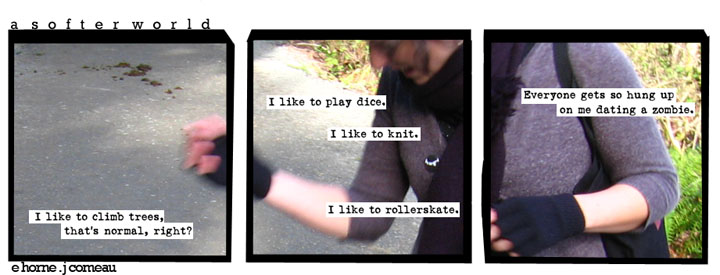
Joey Comeau's flawed debut novel of queer guerrilla terrorism reads like just that--a flawed debut novel--but draws its confused, vengeful protagonist with adamantine sympathy and realism. Our hero may break into people's homes and punch innocent teenage girls in shopping malls, but he's profoundly conflicted about it. He also can't figure out for the life of him why, if gender is a construction, and monogamy unnatural, so many people find themselves stubbornly attracted to the brains and bodies of either men or women. You can read the first seven chapters here for free, but even better than Lockpick are A Softer World, Comeau's collaborative online art and writing project, and his fake cover letters asking potential employers for jobs.
HOMOCORE MINNEAPOLIS
Still soldiering on after Lynn Breedlove's 4/15 appearance and the penultimate Tracy + the Plastics show, Homocore has organized a hip-hop night for May 28th (7th Street Entry, 21+) with seven different artists from around the country. Don't hate on homohop. It's like the line dance they somehow never got around to teaching you in yr elementary school physical education class.
FLAMING FILM FESTIVAL
Minneapolis' own Flaming Film Festival begins this Thursday, May 25th. Skip the treacly hetero liberal-baiting of "All Aboard! Rosie's Family Cruise" but stay for "Is it Really So Strange?", William E. Jones' 2004 doc on Hispanic and Latino Morrissey fans. They're pairing it up with Jem Cohen's Elliott Smith short, and then afterwards local music-types are gonna do live Moz/Smiths/Smith covers. I dare you to go and not sigh expressively. Monday the 29th is the Music Video Showcase, and since the entire festival is hosted by Kill Rock Stars they'll be showing classic and newer vids from E. Smith as well as the SSION, Deerhoof, Sleater-Kinney, Hella and Xiu Xiu.
[Last-minute addenda: Carrie Brownstein in the NYT! Augusten Burroughs in Mpls! Hold him hostage in an elevator with yr loquacity & love--or at least qualms about the film version of Running With Scissors.]
Saturday, May 13, 2006
Aja/Shana/Kimber/Bourdieu
Cartoon cult crit renaissance. I'm still waiting for the radical feminist metaethics of She-Ra.
Prince Adam, He-Man's alter ego, is a ripped Nordic pageboy with blinding teeth and sharply waxed eyebrows who spends lazy afternoons pampering his timid pet cat; he wears lavender stretch pants, furry purple Ugg boots, and a sleeveless pink blouse that clings like saran wrap to his pecs. To become He-Man, Adam harnesses what he calls "fabulous secret powers": His clothes fall off, his voice drops a full octave, his skin turns from vanilla to nut brown, his giant sword starts gushing energy, and he adopts a name so absurdly masculine it's redundant. Next, he typically runs around seizing space-wands with glowing knobs and fabulously straddling giant rockets. He hangs out with people called Fisto and Ram Man, and they all exchange wink-wink nudge-nudge dialogue: "I'd like to hear more about this hooded seed-man of yours!" "I feel the bony finger of Skeletor!" "Your assistance is required on Snake Mountain!"
Prince Adam, He-Man's alter ego, is a ripped Nordic pageboy with blinding teeth and sharply waxed eyebrows who spends lazy afternoons pampering his timid pet cat; he wears lavender stretch pants, furry purple Ugg boots, and a sleeveless pink blouse that clings like saran wrap to his pecs. To become He-Man, Adam harnesses what he calls "fabulous secret powers": His clothes fall off, his voice drops a full octave, his skin turns from vanilla to nut brown, his giant sword starts gushing energy, and he adopts a name so absurdly masculine it's redundant. Next, he typically runs around seizing space-wands with glowing knobs and fabulously straddling giant rockets. He hangs out with people called Fisto and Ram Man, and they all exchange wink-wink nudge-nudge dialogue: "I'd like to hear more about this hooded seed-man of yours!" "I feel the bony finger of Skeletor!" "Your assistance is required on Snake Mountain!"
Thursday, May 11, 2006
Shadowboxer
Your telephoned reports of your visits with Cornell were chock-full of fascinating details, but all I can remember now is the food that was served. Once he invited you to Sunday lunch and served canned spaghetti and peas and carrots. Yum. Then there was the time you brought him a cake and the two of you sat down to drink tea and listen to Dionne Warwick recordings. Suddenly, Cornell burst into tears. You could not take your eyes off the tear-sodden slice of cake that was slowly disintegrating on his plate. Was he crying because he was so saddened by her poignant rendition of "Do You Know the Way to San Jose?" or "You'll Never Get to Heaven (If You Break My Heart)"? Or was he distressed by an intuition that she would later lose her girlish figure and become a spokesperson for the Psychic Friends Network?
-Art in America, 1995
-Art in America, 1995
Noun/verb/magazine
Recently, I was called a son of a bitch in internet-public (a listserv of 300 people). I am both vaguely flattered and amused by this. As an epithet, SOB is noteworthy but less than fearsome--like a sticky, Ritalin'd five-year-old pulling at yr sleeve to watch him go down the slide. SOB is kind of comical. SOB is half the dialogue of a bad Al Pacino movie or Mandy Patinkin in The Princess Bride just before he kills the six-fingered man.
I am not backing down, I am not capitulating. I stand by what I originally wrote, and the style in which I wrote it. I also stand by the fact that I called myself a bitch, even though, like SOB, much of the impact that word once had has been drained or ceded to other words (thank you, Meredith Brooks). If a bitch is someone who speaks her mind in public fiercely, critically and unapologetically, then that is what I am. I wrote the clarification post sans vitriol to try and make it just that--clarified. Make no mistake, I love my Frosted Bitch Flakes. I eat them every morning.
I am not backing down, I am not capitulating. I stand by what I originally wrote, and the style in which I wrote it. I also stand by the fact that I called myself a bitch, even though, like SOB, much of the impact that word once had has been drained or ceded to other words (thank you, Meredith Brooks). If a bitch is someone who speaks her mind in public fiercely, critically and unapologetically, then that is what I am. I wrote the clarification post sans vitriol to try and make it just that--clarified. Make no mistake, I love my Frosted Bitch Flakes. I eat them every morning.
Wednesday, May 10, 2006
Declawed!
Here's what my Slate post might have read like if I hadn't eaten my Frosted Bitch Flakes that morning:
Paragraph 1:
There was a piece in Slate today talking about the debate around S. Merritt's views on race. I'm glad this debate is continuing, because it's really important to talk about music and race and their intersections. The piece's intro, however, made me pause.
Paragraph 2:
The intro uses the word 'cracker,' which has some unpleasant, broadly anti-poor, anti-Southern connotations, and isn't really appropriate here. But the author is using it mainly to show the ways it doesn't apply in this situation anyway, and is picking up on an earlier usage, so I understand.
Paragraphs 3 and 4:
The article then goes on to cite evidence proving why Merritt is an unlikely cracker/racist. These pieces of evidence include his diminutive stature, homosexuality, intellectualism, wit and tenderness as a musician, ukulele-playing, and fondness for chihuahuas and Irving Berlin. I don't see a necessary connection between these things and the likelihood of someone being racist. Some of them also seem to be present in order to reinforce others--a penchant for Berlin and chihuahuas, for example, is often stereotypically (maybe harmfully, maybe not) attributed to gay men. The point, to me, seemed to be to show readers that M. is a recognizable type of person--a fey, sweet gay man--and therefore generally non-threatening and unlikely to be a racist. M. may be this type of person and he might not, but it makes me nervous that a writer would use this technique to disprove someone's alleged racism. Why do we assume that a sweet, musical, fey gay man couldn't be racist? What's the connection? It might be true, perhaps, that queer people are less statistically likely to be racist than straights. But does that really foreclose the issue once and for all? There are a lot of different kinds of queer people out there, with radically different backgrounds and beliefs.
If we really want to be vigilantly anti-racist, I think we should remember here that racism is systemic and institutionalized. We are all susceptible to it, regardless of how sensitive or musical or smart we are. The article suggested to me that it was only recognizing racism in the guise of obvious or stereotypical bigots, when racist ideology today is much more subtle than that.
Paragraph 5:
When the article mentioned M.'s musicianship, it got me thinking about the linkage people sometimes assume exists between artists and their art. Just because somebody makes a lovely song doesn't mean that they themselves are lovely, right? This is an easy trap to fall into, and I feel like the article comes close.
That's a fairly close transcription. I hope it clarifies things.
Paragraph 1:
There was a piece in Slate today talking about the debate around S. Merritt's views on race. I'm glad this debate is continuing, because it's really important to talk about music and race and their intersections. The piece's intro, however, made me pause.
Paragraph 2:
The intro uses the word 'cracker,' which has some unpleasant, broadly anti-poor, anti-Southern connotations, and isn't really appropriate here. But the author is using it mainly to show the ways it doesn't apply in this situation anyway, and is picking up on an earlier usage, so I understand.
Paragraphs 3 and 4:
The article then goes on to cite evidence proving why Merritt is an unlikely cracker/racist. These pieces of evidence include his diminutive stature, homosexuality, intellectualism, wit and tenderness as a musician, ukulele-playing, and fondness for chihuahuas and Irving Berlin. I don't see a necessary connection between these things and the likelihood of someone being racist. Some of them also seem to be present in order to reinforce others--a penchant for Berlin and chihuahuas, for example, is often stereotypically (maybe harmfully, maybe not) attributed to gay men. The point, to me, seemed to be to show readers that M. is a recognizable type of person--a fey, sweet gay man--and therefore generally non-threatening and unlikely to be a racist. M. may be this type of person and he might not, but it makes me nervous that a writer would use this technique to disprove someone's alleged racism. Why do we assume that a sweet, musical, fey gay man couldn't be racist? What's the connection? It might be true, perhaps, that queer people are less statistically likely to be racist than straights. But does that really foreclose the issue once and for all? There are a lot of different kinds of queer people out there, with radically different backgrounds and beliefs.
If we really want to be vigilantly anti-racist, I think we should remember here that racism is systemic and institutionalized. We are all susceptible to it, regardless of how sensitive or musical or smart we are. The article suggested to me that it was only recognizing racism in the guise of obvious or stereotypical bigots, when racist ideology today is much more subtle than that.
Paragraph 5:
When the article mentioned M.'s musicianship, it got me thinking about the linkage people sometimes assume exists between artists and their art. Just because somebody makes a lovely song doesn't mean that they themselves are lovely, right? This is an easy trap to fall into, and I feel like the article comes close.
That's a fairly close transcription. I hope it clarifies things.
Röhm if you want to/ Röhm around the world
Anonymous wrote in to say re: my last post that "...your sentence, 'there are a lot of horribly racist queer people in the world'...needs to be clarified with a 'this is ernst and this is what he did' clause." An earlier anonymous poster also wrote, "Ernst Röhm was gay, but not 'openly' so."
So: this is Ernst, and this is what he did. And here is why I think you could argue that he was "open":
Unlike others in the Nazi Party, Rohm was openly homosexual, admitting to associates that he was "far from unhappy" about his sexual orientation. He frequented gay bars, belonged to a homosexual organization called the League for Human Rights, and publicly advocated the repeal of Paragraph 175. An anonymous 1932 article called "National Socialism and Inversion" has been credited to Rohm's influence (or even authorship); the article stated that if Nazi Party members performed their official duties well, they were entitled to private lives of "creative eroticism" and "loving homosexual relationship[s]."
Rohm established a kind of gay network within the S.A., assigning prominent posts to gay friends and lovers. Among Rohm's "sweethearts" was Edmund Heines, whom Rohm appointed first as his deputy and later as leader of the Munich branch of the S.A. Another of Rohm's favorites was Karl Ernst, who was nicknamed "Frau Rohrbein" for his intimate friendship with Paul Rohrbein, Berlin's S.A. commander...Rohm and his close-knit circle [were] dubbed in a Munich paper the "Brotherhood of Poofs"...
As for the rest of the comments, I am going to let the hate mail pile up a bit more before responding.
So: this is Ernst, and this is what he did. And here is why I think you could argue that he was "open":
Unlike others in the Nazi Party, Rohm was openly homosexual, admitting to associates that he was "far from unhappy" about his sexual orientation. He frequented gay bars, belonged to a homosexual organization called the League for Human Rights, and publicly advocated the repeal of Paragraph 175. An anonymous 1932 article called "National Socialism and Inversion" has been credited to Rohm's influence (or even authorship); the article stated that if Nazi Party members performed their official duties well, they were entitled to private lives of "creative eroticism" and "loving homosexual relationship[s]."
Rohm established a kind of gay network within the S.A., assigning prominent posts to gay friends and lovers. Among Rohm's "sweethearts" was Edmund Heines, whom Rohm appointed first as his deputy and later as leader of the Munich branch of the S.A. Another of Rohm's favorites was Karl Ernst, who was nicknamed "Frau Rohrbein" for his intimate friendship with Paul Rohrbein, Berlin's S.A. commander...Rohm and his close-knit circle [were] dubbed in a Munich paper the "Brotherhood of Poofs"...
As for the rest of the comments, I am going to let the hate mail pile up a bit more before responding.
Thursday, May 04, 2006
Cries and whispers

This Saturday night, the Minnesota Film Arts 24th Annual International Film Festival will show what promises to be the best movie about misfit Swedish teenage girls since Show Me Love. And that's saying a lot. What is it about Sweden that alienates its creative ladygirls so? You'd think that social democracy would count for something, but this tradition stretches all the way back through Bergman and shows no signs of weakening. In God Save the King, director Ulf Malmros pays tribute to the power of punk to save us all, whether from the patriarchy, the sausage factory or ourselves. Don't confuse it with God Wears My Underwear--though that looks awfully Orlando-licious and deserving of yr time as well.
Tuesday, May 02, 2006
Ain't no shame/ ladies do yr thang
Seattle was impossibly green. I couldn't recall much about the last time I was there (1995?) apart from sitting on some dude's roof and seeing a blue heron. This time around, since it was the pop conference, instead of roofs and herons there were name tags, Power Point presentations and Robert Christgau giggling. Falafel pitas were eaten and record stores trolled . Mairead's eagle eyes spotted the Real Janelle EP in Easy Street for $.99 (a steal and a half for the cover of "Where Eagles Dare" alone), and they had Louder Than Bombs for $7.99, so it is officially my new favorite music store. Take that, Cheapo! I also procured two lovely zines:
1) States of White & Green: Writings from the South Bend Juvenile Justice Center (Mairead C., editrix). I got this from Lady M. in lieu of one of her famous perzines, which are out of print, but it is a stunner and far better bound than any of mine.
2) Adventures in High Contrast Living N*23, Pacific NW Special Edition: Babies + Parties, by Shayla H. Babies and parties are rad, and so is Shayla. Marvel and admire here!
My panel went well, despite the fact that I had to follow what might have been the funniest paper of the entire conference: Glenn Dixon's "Boldly Gone: A Personal Trek into the Shameless, Sincere Music of Leonard Nimoy (With an Illuminating Side Trip into the Vocalizing of William Shatner)." All of us in the room, including S. Merritt, grinned and brayed like overly anesthetized donkeys. Other con hi-lites included Jabali Stewart blowing out a Learning Lab speaker with Bad Brains, Sara Marcus exorcising Ani, Joon Oluchi Lee theorizing Courtney Love through Phyllis Wheatley and just about everybody and her mother batting around the words "melisma" and "timbre" like so many music nerd tennis balls. Douglas Wolk's "Complete and Utter History of the Numa Numa Dance" was beautiful, not just for its judicious display of YouTube golden nuggets but also its celebration of misfit pride (the Numa dude was a true pomo freak messiah, preaching his gospel of embarassing yet unabashed love for pop music via webcam).
In general, it was a rapturous, pogo-inducing joy to be around such brilliant and generous people, ladies and men alike, who are helping to tear down the "boys only" sign from the rock crit treehouse. For reals--25 years ago, it would have been floor-to-ceiling Dylan wank-offs and Beatles retrospectives; today we can talk about race! gender! sexuality! and not get backed into the corner with "how is that relevant, exactly?" stares and the threat of girldeath-by-canon. Today I can sit in the audience of a panel made up entirely of women weaving sonic feminism and queerness and Sassy magazine and watch the dudes around me applaud. I felt more than a little twinge of pride in my heart, and I think Jessica Hopper did, too.
Because I was so preoccupied with picking up my jaw from the floor most of the time, my notes were cursory like whoa (M. was far more diligent) but I still managed to scrawl a few choice observations on the back of my entry ticket:
classic 50s chord progression
abjection like in Kristeva; Lacanian presence through absence
Drew Daniel is awesome
I guess that's all one needs to know.
1) States of White & Green: Writings from the South Bend Juvenile Justice Center (Mairead C., editrix). I got this from Lady M. in lieu of one of her famous perzines, which are out of print, but it is a stunner and far better bound than any of mine.
2) Adventures in High Contrast Living N*23, Pacific NW Special Edition: Babies + Parties, by Shayla H. Babies and parties are rad, and so is Shayla. Marvel and admire here!
My panel went well, despite the fact that I had to follow what might have been the funniest paper of the entire conference: Glenn Dixon's "Boldly Gone: A Personal Trek into the Shameless, Sincere Music of Leonard Nimoy (With an Illuminating Side Trip into the Vocalizing of William Shatner)." All of us in the room, including S. Merritt, grinned and brayed like overly anesthetized donkeys. Other con hi-lites included Jabali Stewart blowing out a Learning Lab speaker with Bad Brains, Sara Marcus exorcising Ani, Joon Oluchi Lee theorizing Courtney Love through Phyllis Wheatley and just about everybody and her mother batting around the words "melisma" and "timbre" like so many music nerd tennis balls. Douglas Wolk's "Complete and Utter History of the Numa Numa Dance" was beautiful, not just for its judicious display of YouTube golden nuggets but also its celebration of misfit pride (the Numa dude was a true pomo freak messiah, preaching his gospel of embarassing yet unabashed love for pop music via webcam).
In general, it was a rapturous, pogo-inducing joy to be around such brilliant and generous people, ladies and men alike, who are helping to tear down the "boys only" sign from the rock crit treehouse. For reals--25 years ago, it would have been floor-to-ceiling Dylan wank-offs and Beatles retrospectives; today we can talk about race! gender! sexuality! and not get backed into the corner with "how is that relevant, exactly?" stares and the threat of girldeath-by-canon. Today I can sit in the audience of a panel made up entirely of women weaving sonic feminism and queerness and Sassy magazine and watch the dudes around me applaud. I felt more than a little twinge of pride in my heart, and I think Jessica Hopper did, too.
Because I was so preoccupied with picking up my jaw from the floor most of the time, my notes were cursory like whoa (M. was far more diligent) but I still managed to scrawl a few choice observations on the back of my entry ticket:
classic 50s chord progression
abjection like in Kristeva; Lacanian presence through absence
Drew Daniel is awesome
I guess that's all one needs to know.
Subscribe to:
Posts (Atom)